FOR HEALTHCARE PROFESSIONALS
The Difference Between
Suffering and Relief
We specialize in cutting-edge, non-surgical treatments for conditions like spinal stenosis, bulging discs, herniated discs, and chronic pain.
PB Distributors
FOR HEALTHCARE PROFESSIONALS
The Difference Between
Hoping and Knowing
Most clinics guess at growth. The successful ones have a system.
This is that system.
THE UNCOMFORTABLE TRUTH
Consult a Healer.
"Dr. Walter Henderson brings over 24 years of experience in spinal decompression therapy, achieving remarkable results using the DRX9000 spinal decompression system. Combined with MLS Class 4 laser therapy and a
holistic chiropractic approach , our treatments provide effective relief for not only back and leg pain but also knee, hip, wrist, and ankle discomfort."
The DRX9000
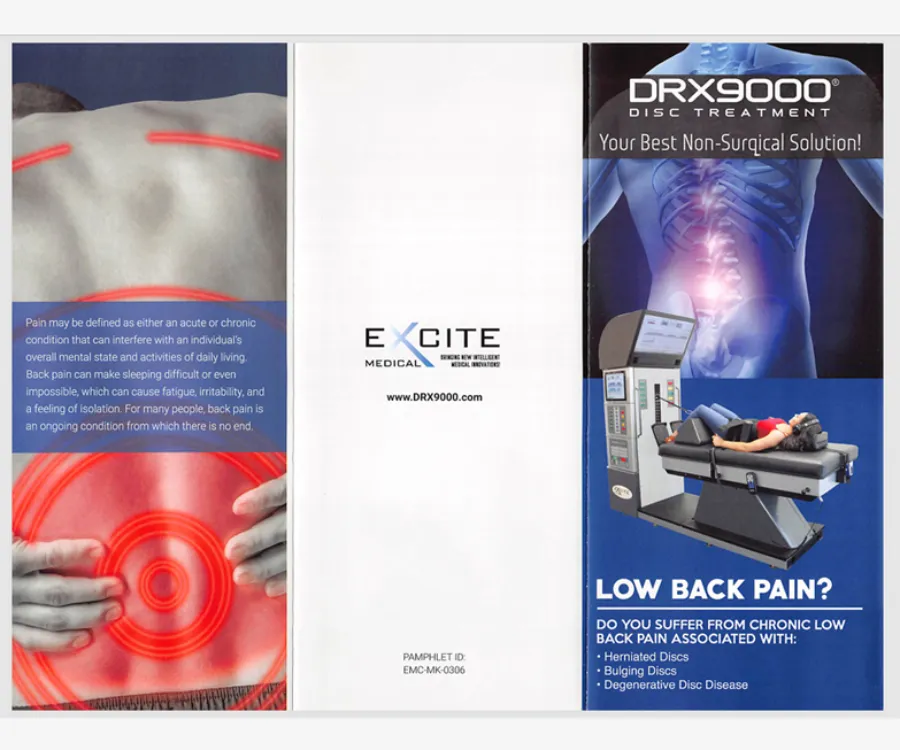
COMMON CAUSES OF BACK PAIN
A herniated disc (also referred to as a protruding or extruded disc) is a condition where a portion of the gel-like center of the disc has migrated through the layers of the annulus fibrosis. This can cause mechan ical pressure on neighboring structures and trigger chemical reactions resulting in pain and inflamma tion. These changes will often irritate the nerves, producing numbness or tingling in the arms or hands. Degenerative disc disease is a state of dehydration and deterioration marked by the gradual erosion of the discs' ability to distribute and resist mechanical loads. As discs deteroriate, they become more susceptible to injury from physical stress. Degenera tive disc disease may also play a contributing role in conditions such as disc bulges, disc herniations, and stenosis. FACET Syndrome: Facets are the posterior joints of the spine that aid in keeping the vertebrae aligned. Facet syndrome is often associated with injury or degeneration of the disc and is characterized by pain, stiffness, and inflammation. The pain generally increases with motion and is relieved by rest.
Sciatica is a condition often associated with a herniated disc by an overgrowth of bone (bone spur).
When the injured disc compresses one of the spinal
nerves forming the sciatic nerve, it can produce a
shock-like pain that travels through the buttocks
and down one leg to below the knee. Tingling and
numbness are common in this condition. Sciatica
can occur suddenly, or develop gradually. The pain
and symptoms of sciatica can be intensified by
coughing, sneezing, or sitting in the same position
for prolonged periods of time.
THE UNCOMFORTABLE TRUTH
You Became a Healer.
Insurance Made You a Clerk.
"Every day, brilliant clinicians watch their margins shrink while their paperwork grows. They know their patients deserve better. They just don't know how to deliver it—profitably."
You didn't spend years mastering your craft to argue with adjusters about reimbursement codes.
You didn't open your practice to spend more time on documentation than with patients.
And you certainly didn't do all of this to watch insurance companies dictate what care you can—and cannot—provide.
There's a way out. And it doesn't require you to abandon insurance entirely. It simply requires you to stop depending on it.
THE OPPORTUNITTY
Treatment
That Patients Actually Want
If you’re suffering from chronic pain, post-surgical discomfort, or looking to avoid surgery altogether, we offer a proven, non-invasive solution . Contact us today to schedule a consultation with Dr. Henderson and take the first step toward lasting pain relief.
THE OPPORTUNITTY
A Cash-Pay Service Line
That Patients Actually Want
Regenerative medicine isn't a trend. It's what patients are already searching for — a way to heal naturally, without the endless cycle of pills and procedures.
What they need is a practitioner they can trust. Someone with the clinical expertise to guide them. Someone like you.
PB Distributors provides the products, the training, and the system. You provide the expertise and the patient relationships you've already built.
This Is
Cash-pay regenerative car
For
Licensed practitioners
Not For
Insurance billing
THE MISSING PIECE
What Good Is a New Service Line
If Nobody Knows About It?
Most programs hand you products and wish you luck. We hand you a marketing system that fills your calendar—automatically.
30
New Appointments. Every Month.
That's what our system is designed to deliver.
Here's what nobody tells you about adding regenerative services: The clinical side is actually the easy part.
The hard part? Getting the right patients through your door. Patients who understand the value. Who are ready to invest in their health. Who don't need convincing—just clarity.
That's why we built something different. A done-for-you local advertising system that targets your ideal patients, in your area, with messaging that resonates—and sends them straight to your schedule.

Precision Targeting
We find patients actively searching for regenerative solutions in your zip code.

Calendar Integration
Leads flow directly into your booking system. No phone tag. No friction.

Pre-Qualified Leads
Every prospect understands the investment before they book. No tire-kickers.

Predictable Growth
Scale up or down based on your capacity. You control the flow.
"You focus on the medicine.
We'll focus on filling your waiting room."
WHAT YOU RECEIVE
Everything You Need.
Nothing You Don't.
01
What is MLS® Laser Therapy & How Can It Help You?
MLS® Laser Therapy is a breakthrough treatment that reduces pain and inflammation while accelerating your body’s natural healing process.
It uses light energy to stimulate damaged cells, increasing circulation and promoting faster tissue repair —helping you heal from the inside out.
02
Non Surgical Spinal Decompression
Spinal decompression therapy
is a non-surgical treatment that gently relieves pressure on the spine, helping to reduce pain from bulging or herniated discs. It promotes natural healing by improving blood flow and nutrient exchange in the affected areas.
03
Shockwave Therapy
Shockwave therapy is a non-invasive treatment that stimulates healing by using sound waves to break down scar tissue and improve circulation. It’s highly effective for chronic pain conditions like plantar fasciitis and tendonitis.
WHAT YOU RECEIVE
Everything You Need.
Nothing You Don't.
01
The Conversation
A focused discovery call. We learn your practice. You learn our approach. No pressure, no pitch—just clarity.
02
The Walkthrough
A live demonstration of the complete system. Products. Protocols. Patient conversations. The full picture.
03
The Roadmap
A personalized action plan. Exactly what to do next, tailored to your specific practice and goals.
Qualified practices may request a complimentary sample.
Experience the product before you commit to anything.
THE PROCESS
From Curiosity to Clarity
FIRST
You Watch
A short video series that explains the approach, the science, and the opportunity. Takes 15 minutes. Saves you hours of research.
THEN
We Talk
A focused call at a time that works for you. Not a sales pitch—a conversation. We answer your questions. You decide if this fits.
FINALLY
You Decide
With complete clarity. You'll understand the products, the process, the investment, and the potential. No pressure. Just information.
THE DIFFERENCE
Take the Next Step Toward
Pain-Free Living
You don’t have to live with pain. If you’re ready for a
safe, natural, and effective solution, Dr. Walter Henderson could be exactly what you need.
THE DIFFERENCE
We Don't Just Sell Products.
We Build Partnerships.
Other companies hand you a box and wish you luck.
We walk beside you. Training your team. Refining your protocols. Helping you have conversations that convert curious patients into committed ones.
The focus is always the same: ethical practice, clear communication, and results that speak for themselves.
Built on Integrity
We source our biologics with the same care you'd want for your own patients. Every product meets rigorous standards. Every claim is backed by science.
Our program is designed exclusively for licensed healthcare professionals who understand the responsibility that comes with regenerative care.
Support That Matters
Clinical training. Patient education materials. Marketing guidance. Ongoing support whenever you need it.
We succeed when you succeed. That's not a slogan—it's how we've built every aspect of this program.
Results vary by practice. We make no guarantees—only promises to support you fully.
Results vary by practice. We make no guarantees—only promises to support you fully.
TESTIMONIALS
What others are saying?
"My life changed forever"After having back pain for quite a while, an MRI found spinal stenosis and bulging discs. Dr. Henderson’s combination of spinal decompression and laser treatments have erased my back pain allowing me to get back to my yoga practice and riding my horses. The office atmosphere is welcoming, friendly and caring. I would highly recommend his practice for these back issues!
A few months ago, my spinal stenosis condition had deteriorated such that I couldn’t walk 100 yards without pain. After a few weeks of spinal decompression therapy sessions, I began walking about a mile. Now I’m up to about 3 miles with no pain. And as an additional benefit my golf scores again are regularly at or below my age.

Two labor days ago, my sciatica acted up. The worst it's ever been. I fell to the floor in pain, it was so painful I was in tears. After several hours, I made it to my feet and googled back pain. That was when I found Dr. Henderson. I didn't believe in chiropractors, but I was desperate. I began his treatment after a brief consultation. After 1 week I was feeling better. So once a week I go in for a treatment and I must say I haven't had that pain since. Amy and Dr Henderson are great and personable and make you feel at ease. They explain everything to you and do just what they promise. I have no problem recommending, and I do often, Dr. Henderson!!!!!!. Thanks 👍

I'm so happy I found Dr. Henderson! when i first came to his office, I could barely get out of the bed in the morning because of the low back and sciatic pain I was in. Dr. Henderson really took his time with me and explained my condition as well as how we could begin to fix it. I began his spinal decompression and laser therapy. We took it one day at a time, and I started noticing a big difference in my first handful of visits!! I am now almost completely pain-free, and cannot believe how this has transformed my life! Worth every penny! Thank you so much to Dr. Henderson and his wife, Amy, who is the sweetest person alive and always makes you feel welcome.

Before seeing Dr. Henderson, I had extreme back pain which made it almost impossible to walk. I have been to chiropractors in the past and did not have the best experience, with little to no improvement. At my first visit, Dr. Henderson took the time to diagnose my issues by taking x-rays and talking to me at length on my pain and the likely cause. The approach Dr. Henderson takes to chiropractic adjustment is much different (and better) than I have experienced in the past as he does not just crack your back, but uses technology to decompress the discs at issue. From my first visit I felt immediate relief and am now pain free. I never had trouble scheduling appointments that worked around my schedule and never had to wait upon arriving at his office. Dr. Henderson and his staff (Amy) were extremely professional at all times. The office is also very clean, neat and organized. If you are looking for a chiropractor I highly recommended Dr. Henderson!

Going to Henderson Chiropractic was the best decision I ever made. The initial consultation was comprehensive and addressed the root cause. Dr. Henderson developed a treatment plan that not only worked but it fit my work schedule! I can’t say enough about my experience and would highly recommend Henderson Chiropractic to anyone.